Saturday, April 20, 2013

University of Michigan president Mary Sue Coleman to retire in '14

University of Michigan President Mary Sue Coleman announced Thursday she will retire in July 2014, ending more than a decade-long tenure marked by an ambitious program of construction and controversy over the school's diversity efforts.

During a meeting of the school's Board of Regents, Coleman, 69, said she would leave when her current contract expires. Her base salary is $603,357.

"Leading the University of Michigan is the most challenging and rewarding work of my career," she said in a statement. "It is a tremendous privilege and one that continually energizes me. I have often said I have the best job in higher education, and I look forward to continuing to work with faculty, students, staff and alumni in the upcoming year.

"The University of Michigan deserves the best in a leader, and I want to give the Board of Regents ample time to select the next president."

Board vice chairwoman Andrea Fischer Newman said she anticipates a formal search will begin this summer.

"Hiring a president is the most critical job of the board, and we will seek an exceptional candidate to lead the university into its third century," Newman said.

U-M will mark its bicentennial in 2017.

At the regents meeting, the university also announced the largest gift in its history, $110 million in securities from investor Charles T. Munger.

The gift from Munger, vice chairman at Warren Buffett's Berkshire Hathaway, will fund a graduate residence hall.

Coleman, U-M's first woman president, has been in office since 2002 and is the school's fourth-longest-serving president. James B. Angell served 38 years, followed by Alexander G. Ruthven at 22 and Harlan H. Hatcher at 16.

"Mary Sue Coleman has been an extraordinary leader of an extraordinary university. The board is profoundly grateful for her service and we anticipate working closely with her on an orderly leadership transition," Newman said.

Coleman pushed for diversity on campus and opposed a state law, passed by voters in 2006, that prohibited considering race in college admissions and public hiring. The U.S. Supreme Court announced last month it would take on a court case involving the law, which was struck down by a federal appeals court in November.

She presided over a busy period of construction at U-M. Buildings erected during her tenure include the North Quad building, Mott Children's Hospital, Von Voigtlander Women's Hospital and Ross Business School complex.

The school also bought 173 acres and 30 buildings in 2009 for a research complex. A new nursing school building also is in the works.

Coleman also led the $3 billion Michigan Difference fundraising campaign.

A year after Coleman was hired, the Wolverine basketball program was put on probation for violations involving booster Ed Martin and $600,000 in payments to four former players, Chris Webber, Maurice Taylor, Robert Traylor and Louis Bullock. Banners won during their time on the team were taken down from Crisler Arena and put in storage.

Coleman said last year she opposed putting the banners back up.

She said she and her husband, Ken, plan to remain in Ann Arbor, where they have bought a home, and will divide their time between Michigan and Colorado, where their son and his family live in Denver.

"We have always lived in college towns and there's really no place like Ann Arbor. We did not think twice about where we wanted to call home after the presidency," she said.

A biochemist, Coleman came to U-M from the University of Iowa, where she was president for seven years. She also held leadership positions at the University of New Mexico, University of North Carolina and University of Kentucky, where for 20 years she directed a cancer research center.

Associated Press contributed.

Source: http://www.detroitnews.com/article/20130418/SCHOOLS/304180472/1361/rss41

final four 2012 bridesmaids winning lottery numbers megamillions winner kansas jayhawks mega millions results susan powell

Ethnicity may influence antibody genes: Immunity-related DNA sections could vary depending on ethnicity

Apr. 18, 2013 ? Cracking the DNA code for a complex region of the human genome has helped 14 North American scientists, including five at Simon Fraser University, chart new territory in immunity research.

They have discovered that a good number of our antibody genes, how well they operate and, potentially, what they fight off, actually vary from person to person. That means even though drugs, treatments and vaccinations are designed to treat whole populations, our response to them could be individualistic.

After completely sequencing the immensely repetitive DNA in the human genome's one million nucleotide-long immunoglobulin heavy (IGH)-chain locus, these scientists have also found ethnicity may influence immunity.

"Time will confirm the extent to which this is true. But we've found that sections of the IGH-chain locus' DNA sequence are either missing or inserted into a person's genome, and this could vary depending on ethnicity," explains Corey Watson.

A postdoctoral researcher at the Mount Sinai School of Medicine in New York, Watson completed his doctoral studies under the supervision of SFU biologist Felix Breden who leads this research project. Watson and Breden still collaborate on research.

Scientists have long known that our IGH-chain locus is our most prolific producer of the 50-plus varied and diverse antibody-encoding genes that our B cells use to fight off infections and diseases.

But thanks to new data-mining technology, this is the first study to radically refine and, until now, roughly-piecemealed genomic map of the human IGH-chain locus.

"Because this is the most complete version of a human's IGH sequence," says Watson, "our data has been integrated into the official human genome project assembly."

Using a single chromosome of an individual, the latest study sequences all possible antibody-encoding genes in our IGH-chain locus. It also identifies 11 possible large DNA insertions and deletions of antibody-encoding genes in the region that determine our antibody gene count/diversity and, in some cases, have been implicated in disease susceptibility.

The scientists uncovered the link between antibody makeup and ethnicity when they screened the chromosomes of 425 people of Asian, African and European descent for several DNA insertions and deletions.

"Again, it's early days," emphasizes Watson, "but these findings could mean that past environmental exposures to certain pathogens caused DNA insertions or deletions in different ethnic groups, which could impact disease risk. Our results demonstrate that antibody studies need to take into account the ethnicity of DNA samples used."

This study's findings will advance research on how IGH-related antibody genetic variation between individuals impacts our ability to fight viruses such as the flu and HIV.

Watson, Breden, three other SFU scientists (Jamie Scott, Jeffery Joy and Robert Holt), science alumnus Jeremy Willsey and researchers in the United States and at the B.C. Cancer Agency contributed equally to this study.

Evan Eichler, a scientist at Seattle's University of Washington genome sciences department and Howard Hughes Medical Institute, developed the technology making this study possible.

Share this story on Facebook, Twitter, and Google:

Other social bookmarking and sharing tools:


Story Source:

The above story is reprinted from materials provided by Simon Fraser University.

Note: Materials may be edited for content and length. For further information, please contact the source cited above.


Journal Reference:

  1. Corey?T. Watson, Karyn?M. Steinberg, John Huddleston, Rene?L. Warren, Maika Malig, Jacqueline Schein, A. Jeremy Willsey, Jeffrey?B. Joy, Jamie?K. Scott, Tina A. Graves, Richard?K. Wilson, Robert?A. Holt, Evan?E. Eichler, Felix Breden. Complete Haplotype Sequence of the Human Immunoglobulin Heavy-Chain Variable, Diversity, and Joining Genes and Characterization of Allelic and Copy-Number Variation. The American Journal of Human Genetics, 2013; 92 (4): 530 DOI: 10.1016/j.ajhg.2013.03.004

Note: If no author is given, the source is cited instead.

Disclaimer: This article is not intended to provide medical advice, diagnosis or treatment. Views expressed here do not necessarily reflect those of ScienceDaily or its staff.

Source: http://feeds.sciencedaily.com/~r/sciencedaily/health_medicine/genes/~3/qVqglyD8BlA/130418142326.htm

philadelphia flyers student loan forgiveness ufc 145 weigh ins record store day 2012 detroit red wings jose canseco zimmerman

Twitter #Music Depends Upon, But Also Pales In Comparison To, Other Music Discovery Services

twitter-musicTwitter #Music got its big public debut today, and at first blush the service is visually impressive, well-designed and features smart, opportunistic integrations. Those integrations, with Rdio and Spotify, completely change how the app works for users who have active accounts with either service, vs. those who don't. And the biggest winners here might just be Rdio and Spotify, since the app experience reinforces just how strong they and other discovery services like Songza really are.
Source: http://feedproxy.google.com/~r/Techcrunch/~3/IVMBcgqTCmo/

Ledecky Nadia Comaneci Rebecca Soni Snoop Lion London 2012 Table Tennis badminton Dominique Dawes

Friday, April 19, 2013

Arrest imminent in marathon bombing

BOSTON (AP) ? A suspect in the Boston Marathon bombings is about to be arrested, a law enforcement official briefed on the investigation said Wednesday.

The official was not authorized to divulge details of the investigation and spoke to The Associated Press on condition of anonymity. The suspect was to be taken into custody by federal marshals and taken to a Boston courthouse, the official said.

The official spoke shortly after several media outlets reported that a suspect had been identified from surveillance video taken at a Lord & Taylor store between the two bomb blasts.

An official news briefing was scheduled later Wednesday.

Law enforcement agencies had earlier pleaded for the public to come forward with photos, videos or any information that might help them solve the twin bombings that killed three people and wounded more than 170 on Monday.

Investigators circulated information about the bombs, which involved kitchen pressure cookers packed with explosives, nails and other lethal shrapnel. But the FBI said nobody had claimed responsibility.

A person close to the investigation had previously told AP the bombs consisted of explosives put in 1.6-gallon pressure cookers, one with shards of metal and ball bearings, the other with nails.

Investigators in white jumpsuits had fanned out across the streets, rooftops and awnings around the blast site in search of clues on Wednesday. They combed through debris amid the toppled orange sports drink dispensers, trash cans and sleeves of plastic cups strewn across the street at the marathon's finish line.

President Barack Obama branded the attack an act of terrorism. Obama plans to attend an interfaith service Thursday in the victims' honor in Boston.

Scores of victims of the Boston bombing remained in hospitals, many with grievous injuries. Doctors who treated the wounded corroborated reports that the bombs were packed with shrapnel intended to cause mayhem. In addition to the 5-year-old child, a 9-year-old girl and 10-year-old boy were among 17 victims listed in critical condition.

The trauma surgery chief at Boston Medical Center says most of the injuries his hospital treated after the marathon bombings were to the legs.

"We have a lot of lower extremity injuries, so I think the damage was low to the ground and wasn't up," Dr. Peter Burke said. "The patients who do have head injuries were blown into things or were hit by fragments that went up."

Dozens of patients have been released from hospitals around the Boston area.

At Massachusetts General Hospital, all four amputations performed there were above the knee, with no hope of saving more of the legs, said Dr. George Velmahos, chief of trauma surgery.

"It wasn't a hard decision to make," he said Tuesday. "We just completed the ugly job that the bomb did."

An intelligence bulletin issued to law enforcement includes a picture of a mangled pressure cooker and a torn black bag that the FBI said were part of a bomb that exploded during the marathon.

The bombs exploded 10 or more seconds apart, tearing off victims' limbs and spattering streets with blood. The blasts near the finish line instantly turned the festive race into a hellish scene of confusion, horror and heroics.

The blasts killed 8-year-old Martin Richard, of Boston, and 29-year-old Krystle Campbell, of Medford. The Shenyang Evening News, a state-run Chinese newspaper, identified the third victim as Lu Lingzi. She was a graduate student at Boston University.

___

Associated Press writers Eileen Sullivan in Washington; Jay Lindsay, Pat Eaton-Robb, Steve LeBlanc, Bridget Murphy, Rodrique Ngowi and Meghan Barr in Boston; Julie Pace and Lara Jakes in Washington; Paisley Dodds in London; Lee Keath in Cairo; and Marilynn Marchione in Milwaukee contributed to this report along with investigative researcher Randy Herschaft in New York.

Source: http://news.yahoo.com/official-arrest-imminent-marathon-bombing-174815379--spt.html

world wildlife fund gsa keith olbermann andrew bynum the time machine michelin tires michelin tires

Thursday, April 18, 2013

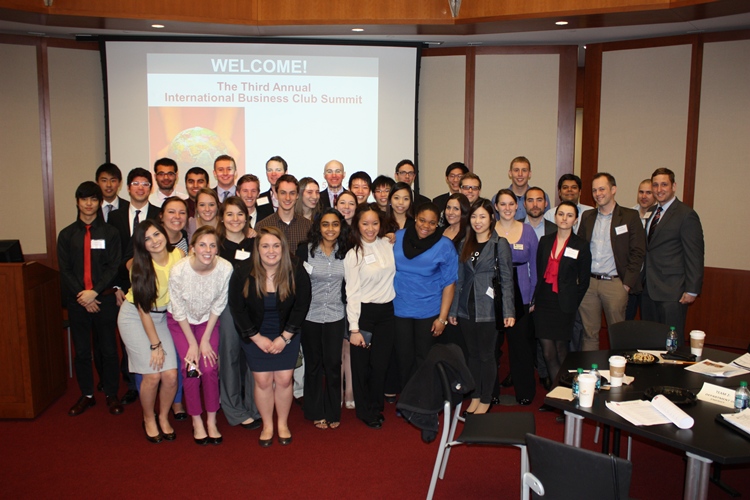
The 2013 International Business Club Summit- a student's experience

Post by Vi Nguyen, CISB student

Vi Nguyen IBC

Thank you to the Global Business Center for giving me for the opportunity to attend the third annual International Business Club (IBC) Summit 2013 at the Fisher College of Business, The Ohio State University. The IBC had prepared an intense two-day summit for the purpose of gathering international business clubs from across the U.S. to share their best practices and develop deeper global awareness. This experience was very inspirational in many ways.

Prior to the event, each student had to fill out an IES (Intercultural Effectiveness Scale) survey. The idea focused on the likelihood of your working effectively with people whose cultural backgrounds differs from yours. This survey related to one of the sessions that were hosted on the first day, which was an assessment debriefing by Dr. Larry Inks, Department of Management and Human Resources, Fisher College of Business, The OSU. Dr. Larry Inks explained the purpose of the IES and emphasized that this assessment allows for an individual to seek out growth opportunities, to grow and develop based on our results. The IES provided us with the information on areas where there is room for improvements and to consider. He further mentioned that our position as college students is the richest environment for global reach.

The next event was the best practices presentation where each club had to give a 10-minute presentation on their club?s best practices and why they think their club is doing a good job for its members. It was then followed by an international trivia/jeopardy quiz where the questions were based from the issues of The Economist magazine. Additional questions were from general awareness and knowledge on global issues, geography, politics, cultures, etc. To end the first night of the summit, we had dinner and the chance for students to network with each other. We also had the honor to have Kent Larsson, currently a retail marketing consultant for The Gordman Group. Mr. Larsson shared his senior positions in marketing, merchandising, and strategic planning during his 30 years in specialty and general merchandise retailing companies such as Big Lots. He also spoke about the challenges of working overseas and of course the rewards of it.

The second day was an intense simulation on making great global decision based on the topic ?China in Africa: Savior or self-interest?. This simulation was created by the Foreign Policy Association that requires robust discussion and consensus building on international topic and was facilitated by Shannon McAfee, Columbus council on World Affairs (who is also from Washington). After reviewing the topic, each team was to debate their positions on elements of this topic and present their points of view to all the participants. To end the summit, we had a keynote speaker: Mr. Patrick Terrien, President and CEO, Columbus Council of World Affairs. We had the opportunity to hear Mr. Terriens biography and how he was exposed to globalization. He then led an informal discussion on the topic of The Business of Global Awareness.

Through this experience, I had the opportunity to learn compelling best practices from other clubs across the U.S., build global competitiveness through survey feedback, test my knowledge with Economist quiz, network with peers also interested in global careers, participate in Foreign Policy Association global simulation and gain a competitive edge by expanding global awareness.

?

Tags: CISB, IBC

You can leave a response, or trackback from your own site.

Source: https://depts.washington.edu/foster/the-2013-international-business-club-summit-a-students-experience/

augusta national blake griffin pau gasol marlins park marbury v. madison 2013 lincoln mkz burger king mary j blige

Indian state stops Playboy beach club from opening

PANAJI, India (AP) ? India's going to have to wait for its first Playboy bunnies.

After a month of heated debate, the government in the tourist hotspot of Goa refused permission for promoters to open the country's first Playboy club in a 22,000-square-foot open-air property on upmarket Candolim beach.

Women's groups and conservative politicians had attacked the proposed club, with Michael Lobo, a legislator from the ruling Bharatiya Janata Party saying it was "tantamount to promoting prostitution."

In the end, the government barred the club from opening in one of India's most famous party locations on technical grounds. Chief Minister Manohar Parrikar told the state assembly Monday that licenses to run so-called beach shacks ? even ones as large as the proposed Playboy club ? could not be granted to companies, only individuals.

"We cannot give them a license to operate a beach shack," Parrikar said.

Mumbai-based PB Lifestyle announced last year it had obtained an exclusive license to open Playboy clubs, hotels, bars and cafes and sell Playboy branded merchandise in India. It said it would start with a club in Goa and then expand to the southern city of Hyderabad.

PB Lifestyle chief executive Sanjay Gupta did not immediately respond to a message left at his office.

He said last year he was working to recast Playboy into an aspirational lifestyle brand that wouldn't spark a backlash in the conservative country, distancing itself from nudity and toning down the traditional, body-hugging bunny costume.

Goa's decision does not bar the opening of a conventional Playboy club in in the state, just the beach shack.

Lobo has called on the government to prevent Playboy from setting shop in any form in the state.

"It is not just a question of permitting Playboy in Candolim. It should be banned across Goa, because Goa should be veered away from international chains which promote vulgarity," Lobo said.

Agnelo Fernandes, a local Congress politician on whose property the beach club was to be located, called the government's decision "unfortunate." He has been acting as a de facto spokesman for the project during the controversy.

"It would have been great for Goa to have an international lifestyle brand. There is no question of vulgarity. Our bunny costumes which we had designed were more sober than the one's worn by the cheerleaders at the IPL (Indian Premier League)," Fernandes said, referring to a raucous Indian cricket league.

Source: http://news.yahoo.com/indian-state-stops-playboy-beach-club-opening-110614752--finance.html

seattle seahawks new uniforms wisconsin recall wisconsin recall doris day buffalo sabres texas news kim mulkey

I Can't Believe This Flying Guy in a Wingsuit Didn't Crash Into the Mountain at 155MPH

I keep watching this video over and over and every time this insane guy in a wingsuit somehow manages to avoid smashing into the side of the mountain by perfectly zipping through a ridiculously narrow cave. It's unbelievable. It doesn't make sense. He's flying at 155 miles per hour! More »


Source: http://feeds.gawker.com/~r/gizmodo/full/~3/EDGqXAAJs-8/i-cant-believe-this-flying-guy-in-a-wingsuit-didnt-crash-into-the-mountain-at-155mph

the Grammys 2013 State of the Union 2013 katy perry Rihanna Katy Perry Grammys 2013 taylor swift taylor swift